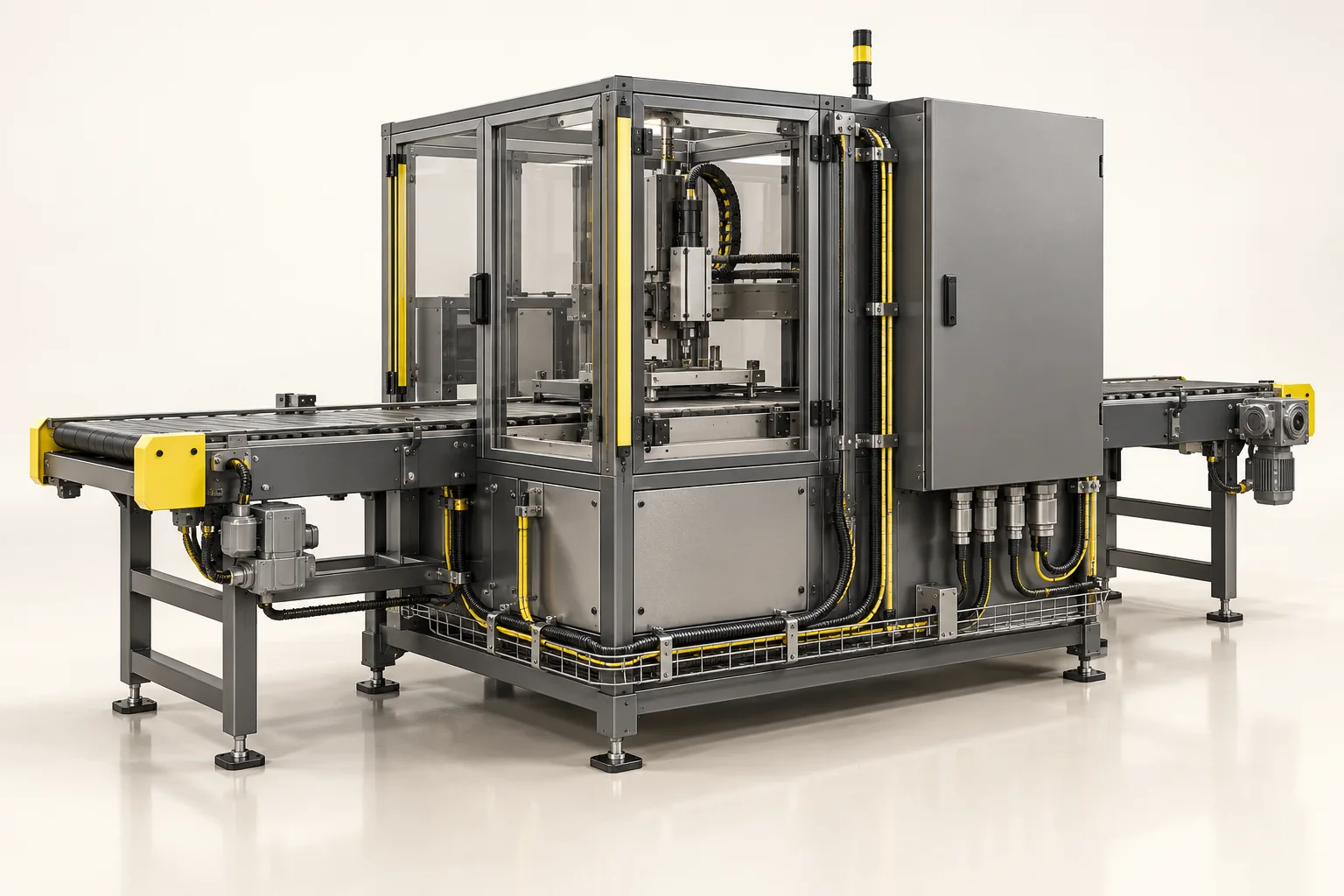
Application illustration — not a project reference or installation drawing.
Specify the details between the cabinet and the machine.
Manage the cable entries
List each cabinet, motor or equipment entry with its cable and thread requirements. Identify shielded cables separately.
What to check
Confirm cable diameter, entry thread, conduit size and shielding requirements where applicable. Do not assume a standard gland provides an EMC connection.
Choose ties, clamps and mounts around bundle size, support points and access for maintenance.
What to check
Distinguish stationary cables from moving cable systems. State vibration, temperature, oil or chemical exposure and mounting constraints for model-specific review.
Specify wire-end and detachable connection components against the mating equipment, rather than selecting by appearance.
What to check
For plugs and sockets, provide the required electrical rating, pole arrangement and mating interface. For terminals, provide conductor size and termination geometry.
A clear specification helps us discuss the right models with you.
Equipment connection and mating-interface details
Fixed or moving cable routes and bundle sizes
Temperature, vibration and fluid exposure
Required quantities and replacement-part references
These guides support component sourcing, not system design or installation. Suitability, ratings and compliance must be verified for the selected models and the completed assembly.
Share your machine component requirements
Share your application, part references and quantities with YOCL.

 Metall-Kabelverschraubungen
 EMV-Kabelverschraubungen
 Schlauchverschraubungen
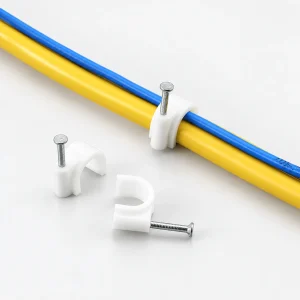 Kabelclips & -schellen
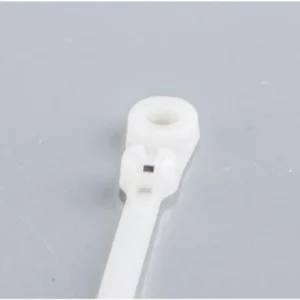 Befestigungskabelbinder
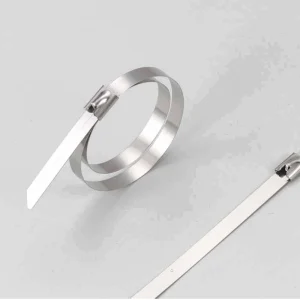 Edelstahl-Kabelbinder
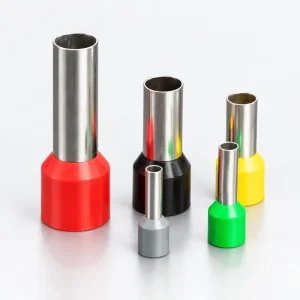 Aderendhülsen