
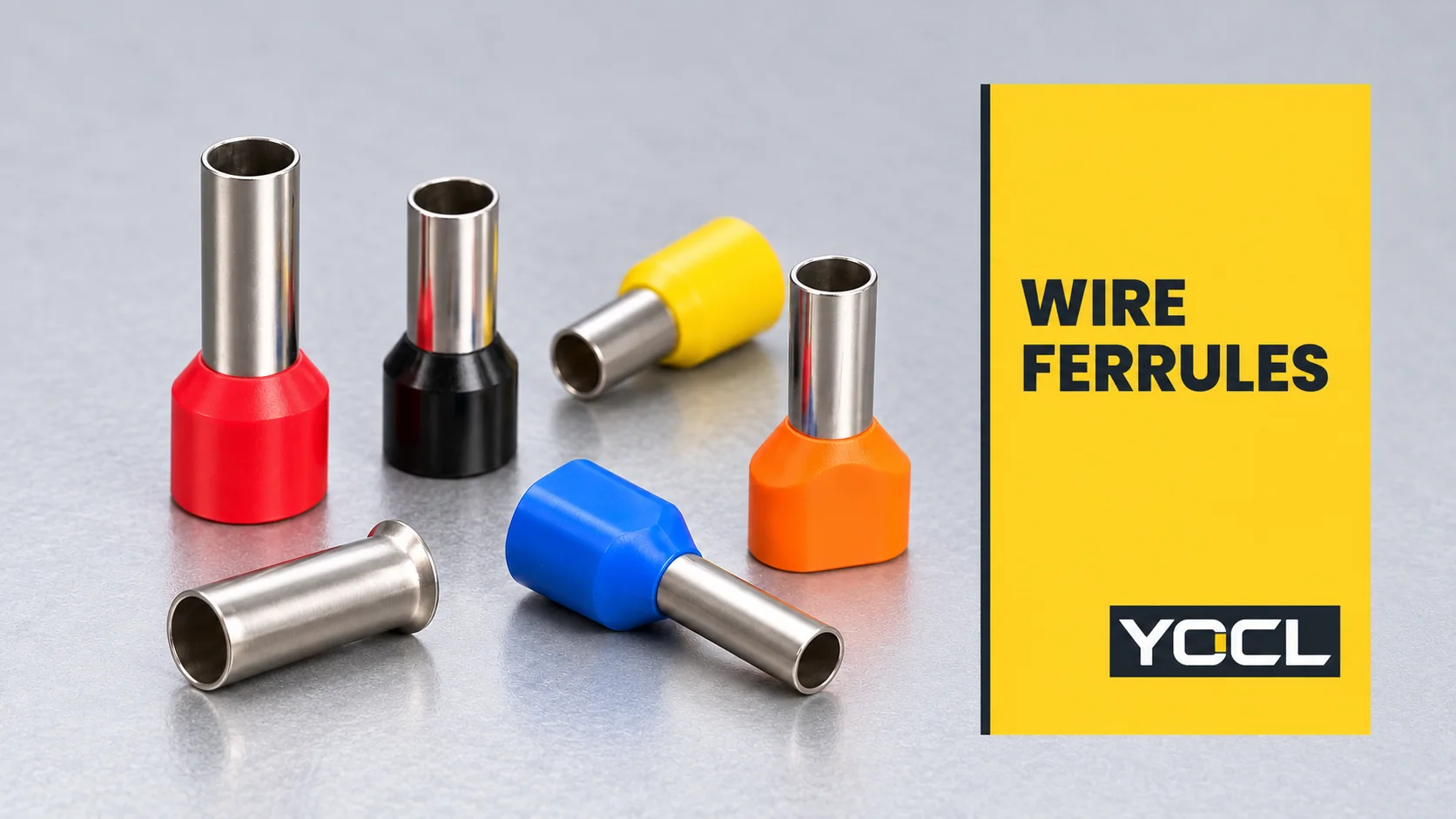
الطرْف السلكي هو كم معدني أنبوبي يتم تثبيته بالكبس حول خيوط الموصل المجردة لإعداد طرفه للإدخال في طرف توصيل متوافق. يجمع الخيوط في طرف محتوى. يوفر طرف التوصيل اتصال التثبيت؛ يجب أن يناسب نوع الطرف وحجمه وشكله النهائي هذا الاتصال.
يُطلق عليه أيضًا طرْف رباط الحذاء, كم نهاية السلك أو طرْف نهاية السلك, ، يتم تحديد هذا المكون بأكثر من لون الطوق. لفهم الطرف، افصل سعة الموصل الخاص به وهندسة الكم والاستخدام المسموح به في طرف الاستقبال.
ماذا يفعل الطرف السلكي؟
يحيط الغلاف المعدني بخيوط الموصل المكشوفة. يشكل التجعيد الغلاف حولها بحيث يمكن التعامل مع الطرف المُجهز وإدخاله كمجموعة واحدة محتواة. في الإصدار ذي الياقة، يحيط مدخل البلاستيك بطرف إدخال السلك؛ يدخل الجزء المعدني البارز في منطقة تلامس الطرف.
النطاق العام لـ UL 486F، أطراف توصيل عارية ومغطاة يصف أطراف التوصيل بأنها تحضير لنهاية الموصل يسهل توصيل الأسلاك المجدولة ويمنع تراجع الخيوط أثناء الإدخال. ويشمل تصميمات لموصل نحاسي مجدول واحد أو اثنين من نفس الحجم.
تختلف هذه الوظيفة عن طرف توصيل مثبت ببرغي على مسمار أو موصل يربط بين طرفي كابلين. طرف التوصيل يُجهز الطرف لجهاز توصيل آخر. UL 486F يفصل أيضًا أطراف التوصيل عن محولات الدبوس التي تغطيها معايير الموصلات الأخرى؛ طرف معدني يبدو مشابهًا لا يضمن التوافق المتبادل.
DIN 46228-4:2020-03 يحدد أكمام النهاية الأنبوبية بأكمام بلاستيكية. يشرح تقديمه الرسمي احتواء الخيوط وسهولة إدخال الطرف. وهذا يدعم الغرض من المكون، دون أن يثبت أن كل طرف يتطلب واحدًا.
أنواع أطراف التوصيل الرئيسية للسلك
التمييز الأول الأكثر فائدة هو موصل واحد أو موصلان, متبوعًا بـ بناء ذو طوق أو بدون طوق. ينظم كتالوج YOCL هذه في سلاسل E و EN و TE:
| الإنشاء | ترتيب مرئي | ما يحتاج إلى فحص منفصل |
|---|---|---|
| طرف سلكي معزول من النوع E أحادي السلك | كم واحد معزول مع طوق عازل | حجم الموصل المفرد، طول الكم، وخلوص الطوق |
| حلقة طرفية أحادية السلك غير معزولة | كم معدني عارٍ بمدخل واسع | حجم الموصل، وأبعاد الأنبوب، وترتيب عزل المعدات |
| حلقة طرفية مزدوجة السلك معزولة من TE | كم مشترك وياقة أوسع لموصلين | حجم كل موصل وقبول إنهاء السلكين المكتمل |
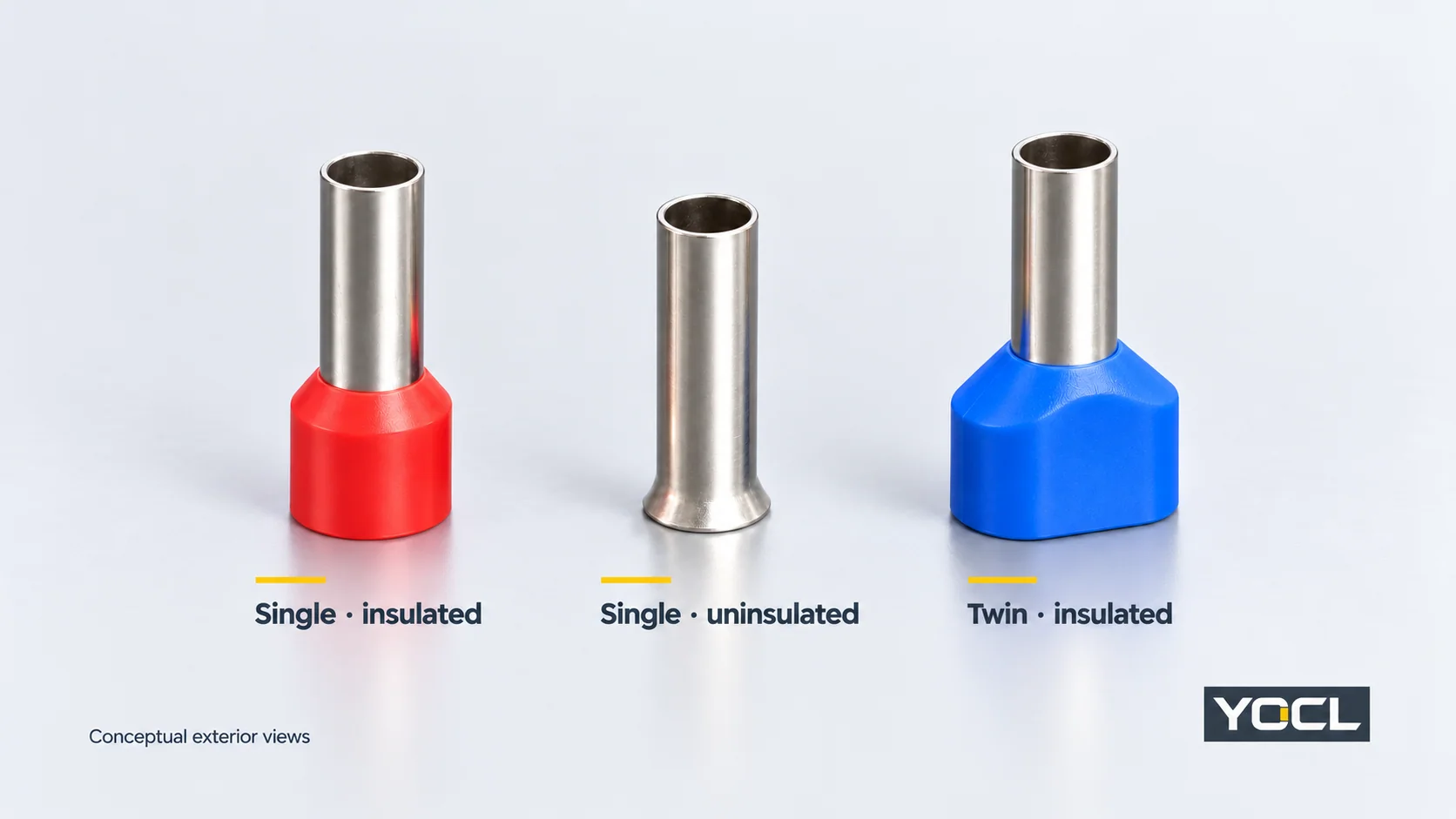
هذه أسماء سلسلة YOCL، وليست نظام تسمية عالمي لكل مورد. كلمة “معزولة” تحدد بناء الياقة؛ فهي لا توفر تصنيف جهد للوصلة المكتملة. وبالمثل، كلمة “مزدوجة” تحدد ترتيب الموصل المقصود، بدلاً من السماح بوضع سلكين في أي طرفية.
كيفية قراءة مقاس طرف سلك
مساحة الموصل تختلف عن القطر
تسمية مثل 1.5 mm² تشير إلى مساحة المقطع العرضي للموصل. إنها ليست القطر الخارجي للكابل، أو قطر تجويف الطرف، أو قطر طوقه البلاستيكي.
Read the ferrule’s declared conductor size alongside its drawing. The conductor determines the capacity needed inside the sleeve; the ferrule’s external dimensions affect the space needed at the terminal. Cable insulation and collar geometry add another fit question at the entry.
American Wire Gauge (AWG) is another conductor-size designation. Use the exact AWG or metric sizes declared for the chosen product and conductor. A catalogue pairing is not a reason to assume every nearby AWG/mm² size is an approved substitute.
Sleeve length is different from overall length
Ferrules of the same conductor capacity can have different sleeve lengths. On YOCL’s E-series drawing, F identifies the sleeve-length segment and L the overall length including the collar. These letter labels belong to that drawing; check the exact series before transferring their meanings.
The published E-series و TE-series tables provide a useful example:
| YOCL model | ترتيب الموصل المُعلن عنه | F sleeve length | L overall length |
|---|---|---|---|
| E1508 | One × 1.5 mm² | 8.0 mm | 15.0 mm |
| E1512 | One × 1.5 mm² | 12.0 mm | 19.0 mm |
| TE 1508 | Two × 1.5 mm² | 8.0 mm | 15.5 mm |
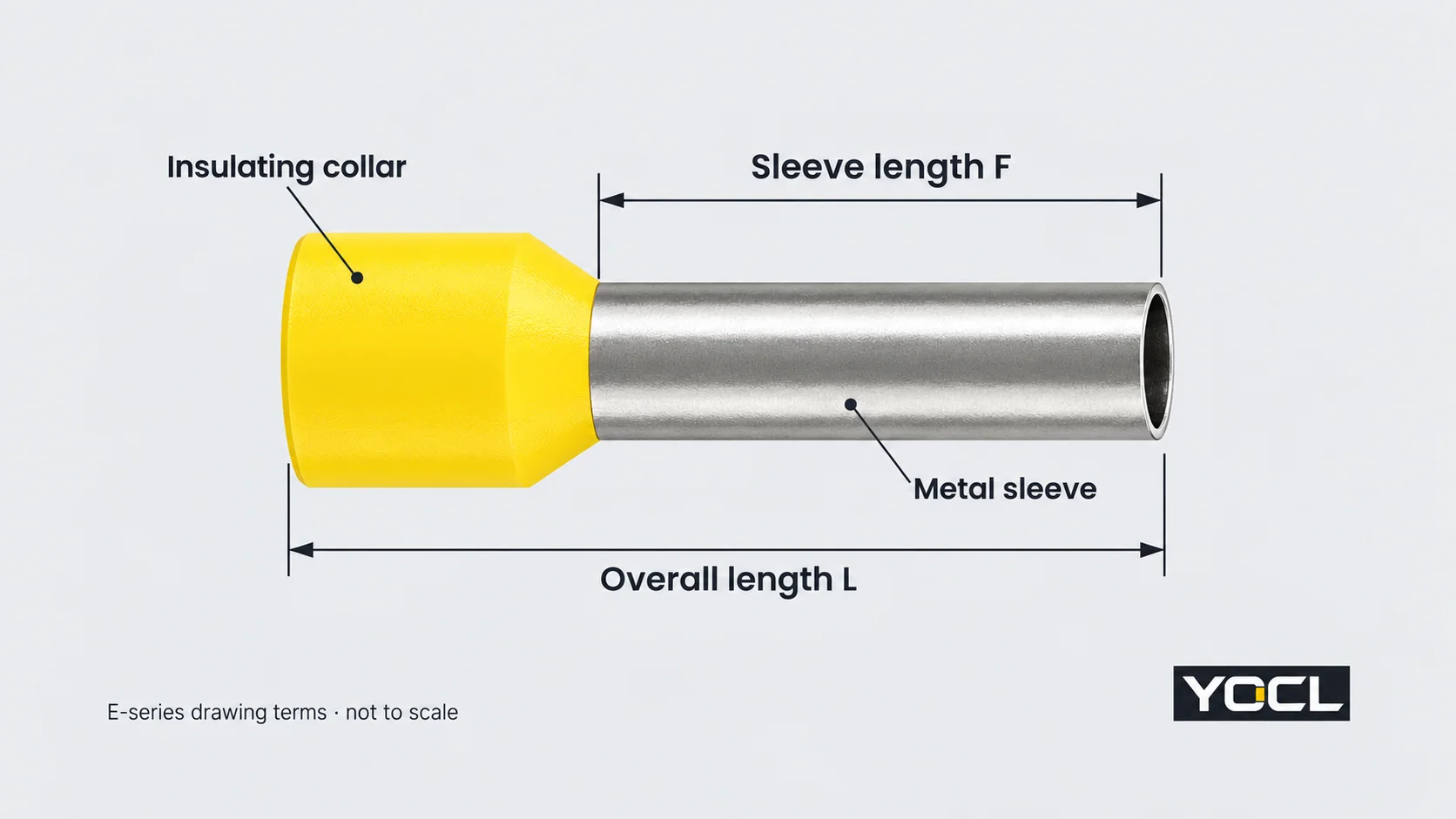
These are catalogue dimensions, not measurements of an installed connection. E1508 and E1512 accept the same declared conductor area but have different lengths. TE 1508 shares an 8 mm F dimension with E1508 while describing a different conductor arrangement. Neither area nor sleeve length alone determines terminal compatibility.
The receiving terminal’s insertion depth and preparation instructions determine which length is appropriate. Overall length cannot substitute for sleeve length when comparing the metal portion with the terminal’s contact space.
Twin notation and collar colour need their own reading
2 × 1.5 mm² means two conductors, each 1.5 mm². Their nominal areas add to 3 mm², but that arithmetic does not turn the twin ferrule into a single-wire 3 mm² model. Entry geometry, sleeve capacity, tooling and the permitted terminal arrangement remain separate requirements.
Colour is useful only within the specified catalogue coding. YOCL’s E-series lists colour options by size group. Its TE 7508 and TE 7510 models both declare 2 × 0.75 mm², yet list blue and grey collars respectively. Confirm the model and conductor designation rather than selecting a ferrule from colour alone.
What makes a ferrule compatible with a terminal?
Compatibility involves three interfaces:
- Conductor to ferrule: the conductor material, size and count must match the ferrule’s declared arrangement.
- Ferrule to crimping tool: the applicable tool and die must produce the required termination for that ferrule. Tool capacity alone does not establish the correct finished profile.
- Finished ferrule to terminal: the receiving device must permit the prepared conductor arrangement and accommodate its sleeve, crimp profile and collar.
“Screw terminal”, “spring terminal” and “push-in terminal” name connection mechanisms. They do not provide a universal answer to whether a ferrule is required, optional or unsuitable. Use the exact device’s instructions and any declared range for ferruled conductors. A ferrule that physically enters the opening has passed only a geometry check.
There is also an explicit scope boundary: UL 486F’s public scope excludes insulation-displacement connection (IDC) terminal blocks. Do not treat a prepared metal sleeve as a general replacement for the insulated wire that an IDC contact is designed to engage.
For a twin ferrule, verify acceptance of the two-conductor arrangement and its finished dimensions. A larger opening, a sufficient nominal area or a broad plastic collar cannot supply that authorization. Square and hexagonal crimp names also need to be checked against the actual ferrule, tooling and terminal documentation; neither is a universal compatibility rule.
What do standards and certification tell you?
Standard identity, product dimensions and connection approval answer different questions. DIN’s published title identifies a construction family; UL 486F’s public scope identifies its intended use and exclusions. A supplier’s reference to either standard is not, by itself, a model-specific certification record.
UL Solutions’ explanation of Component Recognition distinguishes a component’s assessment from certification of a complete end product. Recognized components have conditions of acceptability governing their use. Where certification is required, check the exact product record and applicable conditions alongside the receiving equipment’s documentation.
The YOCL dimensions above are first-party product declarations. They help interpret size fields; this article does not assert UL certification, a current rating or an approved terminal combination for those models.
Which document should you check next?
| سؤالك | The next document to use |
|---|---|
| Which construction describes the part I need? | The single, bare or twin product-family information |
| What conductor does this model accept? | Its declared conductor size, material and count |
| What do its length and diameter fields mean? | The exact model/series drawing and dimension table |
| Which tool produces the required crimp? | The applicable ferrule and tooling instructions |
| Is the prepared end permitted in my terminal? | The exact receiving device’s wiring instructions and connection data |
| What evidence covers the intended equipment or market? | Relevant model certification records, conditions and equipment requirements |
الـ YOCL wire-ferrule catalogue routes these construction and dimension questions to the E, EN and TE product information. When asking for a model review, include the conductor size and count, required sleeve length and receiving terminal reference so the enquiry describes the complete interface.
المراجع
- UL المعايير والمشاركة — UL 486F: Bare and Covered Ferrules, Edition 3, 2024, revised August 2026. Official public scope, §§1.2, 1.6 and 1.8; function, conductor arrangement and exclusions.
- DIN Media — DIN 46228-4:2020-03: Tubular end-sleeves with plastic sleeve. Official publication identity and public introduction; the paid full standard was not consulted.
- YOCL معلومات المنتج — أطراف توصيل الأسلاك المعزولة من سلسلة E. Construction, model dimensions, drawing and declared colour options.
- YOCL معلومات المنتج — أطراف توصيل الأسلاك غير المعزولة من سلسلة EN. Bare flared-entry construction and dimension fields.
- YOCL معلومات المنتج — موصلات طرف السلك المزدوجة من سلسلة TE. Two-conductor notation, model dimensions and model-specific collar colours.
- , حلول UL — The UL Component Recognition Classification. Component conditions of acceptability and the end-product certification boundary.