
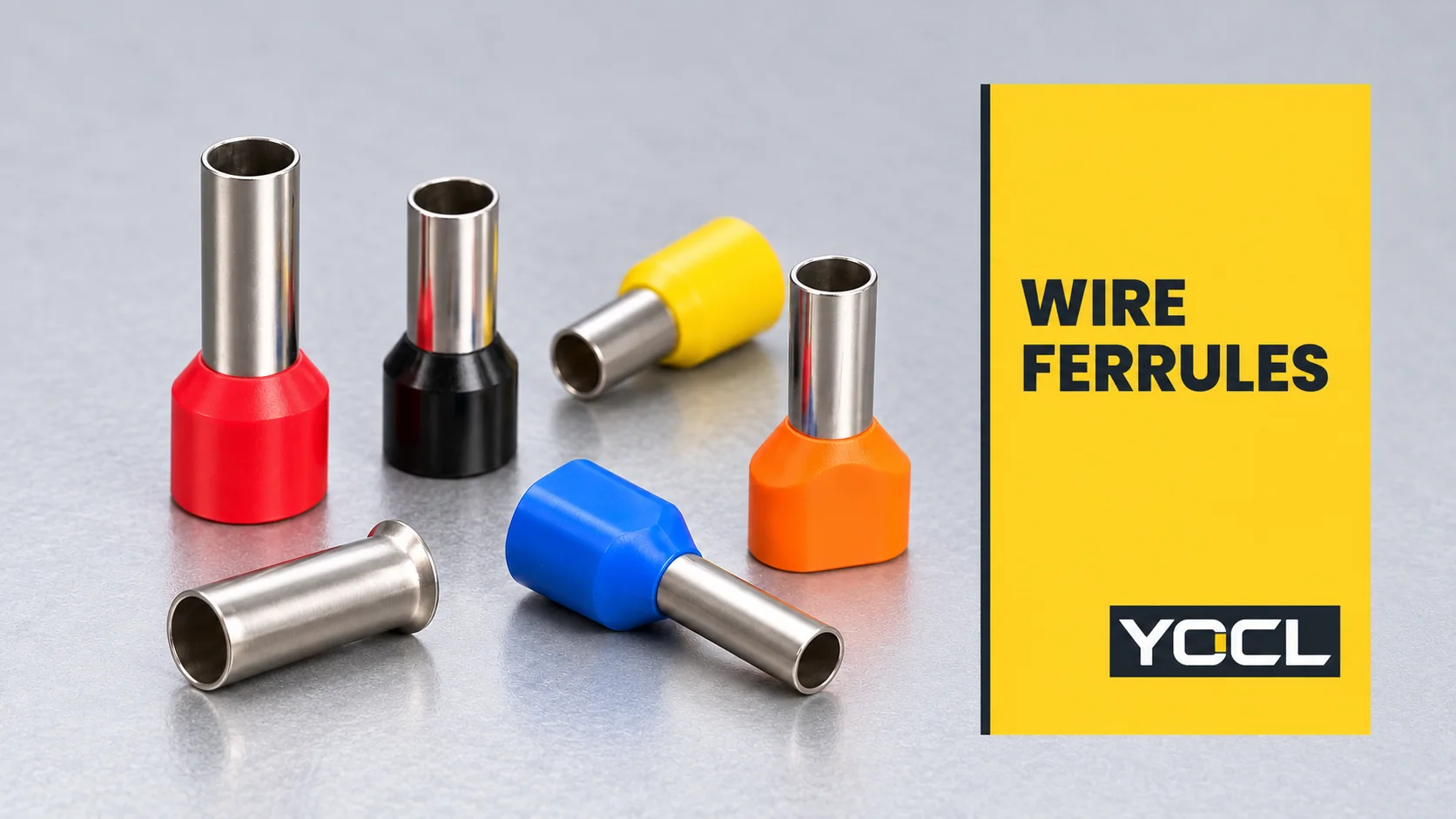
A wire ferrule is a tubular metal sleeve crimped around the stripped strands of a conductor to prepare its end for insertion into a compatible terminal. It gathers the strands into a contained end. The terminal still provides the clamping connection; the ferrule’s type, size and finished shape must suit that connection.
Also called a bootlace ferrule, wire-end sleeve hoặc cord-end ferrule, this component is specified by more than collar colour. To understand a ferrule, separate its conductor capacity, sleeve geometry and permitted use in the receiving terminal.
What does a wire ferrule do?
Ống bọc kim loại bao quanh các sợi dây dẫn lộ ra. Việc bấm tạo thành ống bọc quanh chúng để đầu đã chuẩn bị có thể được xử lý và lắp vào như một bó được chứa. Trong phiên bản có cổ, đầu vào bằng nhựa bao quanh đầu vào dây; phần kim loại nhô ra đi vào khu vực tiếp xúc của đầu cuối.
Phạm vi công khai của UL 486F, Đầu cos trần và có vỏ bọc mô tả đầu cos là bộ phận chuẩn bị đầu dây dẫn, giúp kết nối dây bện và ngăn các sợi bị cong ngược trong quá trình lắp. Nó bao gồm các thiết kế cho một dây dẫn đồng bện hoặc hai dây cùng kích cỡ.
Chức năng này khác với đầu cos bắt bu lông vào chốt hoặc đầu nối hai đầu cáp. Đầu cos chuẩn bị đầu cho một thiết bị kết nối khác. UL 486F cũng phân biệt đầu cos với bộ chuyển đổi dạng ghim được đề cập trong các tiêu chuẩn đầu nối khác; một đầu kim loại trông tương tự không thiết lập khả năng thay thế cho nhau.
DIN 46228-4:2020-03 xác định các ống bọc đầu dạng ống có ống bọc bằng nhựa. Giới thiệu chính thức giải thích việc chứa các sợi dây và dễ dàng lắp đầu cuối hơn. Điều đó hỗ trợ mục đích của thành phần, mà không thiết lập rằng mọi đầu cuối đều yêu cầu nó.
Các loại đầu cos dây chính
Sự phân biệt đầu tiên hữu ích nhất là một dây dẫn hoặc hai, theo sau là cấu trúc có cổ hoặc không có cổ. Danh mục của YOCL sắp xếp chúng thành các dòng E, EN và TE:
| Cấu tạo | Bố cục hiển thị | Những gì cần kiểm tra riêng |
|---|---|---|
| Đầu cosse bọc cách điện cho dây đơn E | Một ống lồng với cổ cách điện | Kích thước một dây dẫn, chiều dài ống và khoảng hở cổ áo |
| Ferrule đơn cho dây đơn không cách điện | Ống kim loại trần có đầu loe | Kích thước dây dẫn, kích thước ống và cách bố trí cách điện của thiết bị |
| Ferrule đôi cho dây đôi có cách điện TE | Ống chung và cổ rộng cho hai dây dẫn | Kích thước của mỗi dây dẫn và khả năng chấp nhận đầu cuối hai dây đã hoàn thiện |
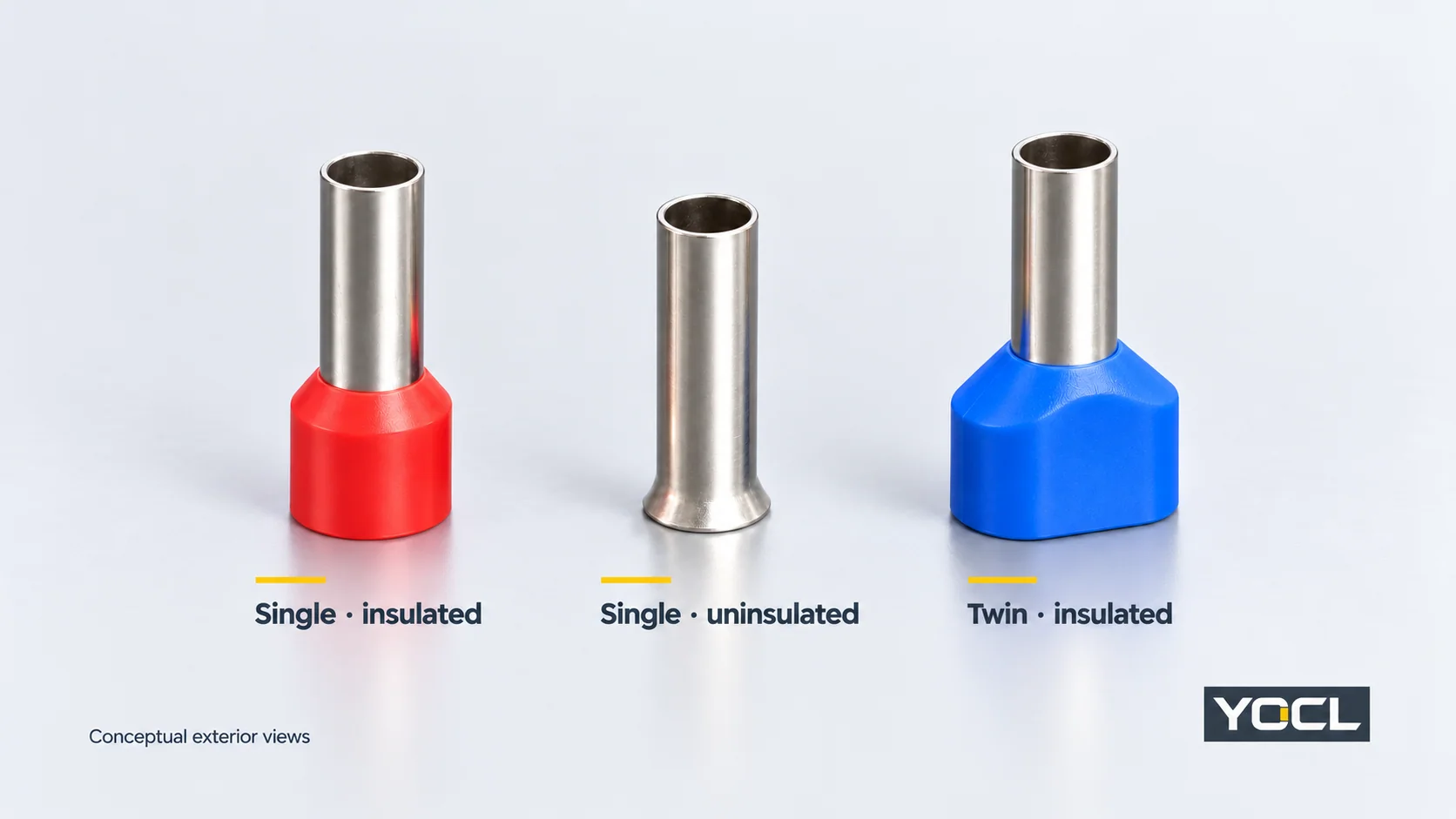
Đây là tên dòng sản phẩm YOCL, chứ không phải là hệ thống đặt tên phổ quát cho mọi nhà cung cấp. “Cách điện” xác định cấu tạo cổ áo; nó không cung cấp định mức điện áp cho kết nối đã hoàn thành. Tương tự, “đôi” xác định cách bố trí dây dẫn dự định, chứ không phải là sự cho phép đưa hai dây vào bất kỳ đầu cuối nào.
Cách đọc kích thước đầu cos
Tiết diện ruột dẫn khác với đường kính
Một ký hiệu như 1.5 mm² đề cập đến tiết diện ruột dẫn. Nó không phải là đường kính ngoài của cáp, đường kính lỗ của đầu cos hoặc đường kính của cổ nhựa của nó.
Read the ferrule’s declared conductor size alongside its drawing. The conductor determines the capacity needed inside the sleeve; the ferrule’s external dimensions affect the space needed at the terminal. Cable insulation and collar geometry add another fit question at the entry.
American Wire Gauge (AWG) is another conductor-size designation. Use the exact AWG or metric sizes declared for the chosen product and conductor. A catalogue pairing is not a reason to assume every nearby AWG/mm² size is an approved substitute.
Sleeve length is different from overall length
Ferrules of the same conductor capacity can have different sleeve lengths. On YOCL’s E-series drawing, F identifies the sleeve-length segment and L the overall length including the collar. These letter labels belong to that drawing; check the exact series before transferring their meanings.
The published E-series và TE-series tables provide a useful example:
| YOCL model | Cách bố trí dây dẫn đã khai báo | F sleeve length | L overall length |
|---|---|---|---|
| E1508 | One × 1.5 mm² | 8.0 mm | 15.0 mm |
| E1512 | One × 1.5 mm² | 12.0 mm | 19.0 mm |
| TE 1508 | Two × 1.5 mm² | 8.0 mm | 15.5 mm |
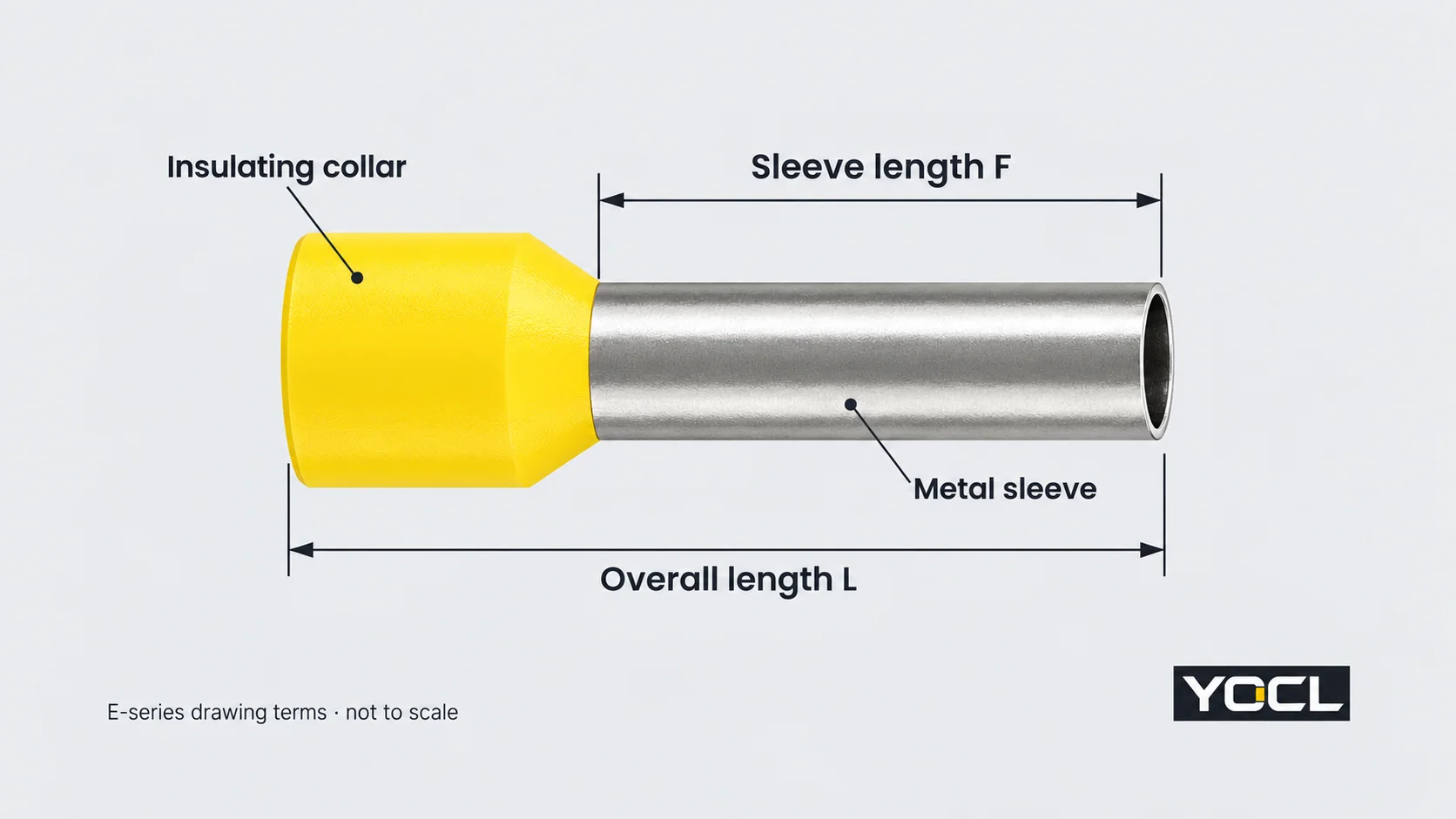
These are catalogue dimensions, not measurements of an installed connection. E1508 and E1512 accept the same declared conductor area but have different lengths. TE 1508 shares an 8 mm F dimension with E1508 while describing a different conductor arrangement. Neither area nor sleeve length alone determines terminal compatibility.
The receiving terminal’s insertion depth and preparation instructions determine which length is appropriate. Overall length cannot substitute for sleeve length when comparing the metal portion with the terminal’s contact space.
Twin notation and collar colour need their own reading
2 × 1.5 mm² means two conductors, each 1.5 mm². Their nominal areas add to 3 mm², but that arithmetic does not turn the twin ferrule into a single-wire 3 mm² model. Entry geometry, sleeve capacity, tooling and the permitted terminal arrangement remain separate requirements.
Colour is useful only within the specified catalogue coding. YOCL’s E-series lists colour options by size group. Its TE 7508 and TE 7510 models both declare 2 × 0.75 mm², yet list blue and grey collars respectively. Confirm the model and conductor designation rather than selecting a ferrule from colour alone.
What makes a ferrule compatible with a terminal?
Compatibility involves three interfaces:
- Conductor to ferrule: the conductor material, size and count must match the ferrule’s declared arrangement.
- Ferrule to crimping tool: the applicable tool and die must produce the required termination for that ferrule. Tool capacity alone does not establish the correct finished profile.
- Finished ferrule to terminal: the receiving device must permit the prepared conductor arrangement and accommodate its sleeve, crimp profile and collar.
“Screw terminal”, “spring terminal” and “push-in terminal” name connection mechanisms. They do not provide a universal answer to whether a ferrule is required, optional or unsuitable. Use the exact device’s instructions and any declared range for ferruled conductors. A ferrule that physically enters the opening has passed only a geometry check.
There is also an explicit scope boundary: UL 486F’s public scope excludes insulation-displacement connection (IDC) terminal blocks. Do not treat a prepared metal sleeve as a general replacement for the insulated wire that an IDC contact is designed to engage.
For a twin ferrule, verify acceptance of the two-conductor arrangement and its finished dimensions. A larger opening, a sufficient nominal area or a broad plastic collar cannot supply that authorization. Square and hexagonal crimp names also need to be checked against the actual ferrule, tooling and terminal documentation; neither is a universal compatibility rule.
What do standards and certification tell you?
Standard identity, product dimensions and connection approval answer different questions. DIN’s published title identifies a construction family; UL 486F’s public scope identifies its intended use and exclusions. A supplier’s reference to either standard is not, by itself, a model-specific certification record.
UL Solutions’ explanation of Component Recognition distinguishes a component’s assessment from certification of a complete end product. Recognized components have conditions of acceptability governing their use. Where certification is required, check the exact product record and applicable conditions alongside the receiving equipment’s documentation.
The YOCL dimensions above are first-party product declarations. They help interpret size fields; this article does not assert UL certification, a current rating or an approved terminal combination for those models.
Which document should you check next?
| Câu hỏi của bạn | The next document to use |
|---|---|
| Which construction describes the part I need? | The single, bare or twin product-family information |
| What conductor does this model accept? | Its declared conductor size, material and count |
| What do its length and diameter fields mean? | The exact model/series drawing and dimension table |
| Which tool produces the required crimp? | The applicable ferrule and tooling instructions |
| Is the prepared end permitted in my terminal? | The exact receiving device’s wiring instructions and connection data |
| What evidence covers the intended equipment or market? | Relevant model certification records, conditions and equipment requirements |
Tỷ lệ YOCL wire-ferrule catalogue routes these construction and dimension questions to the E, EN and TE product information. When asking for a model review, include the conductor size and count, required sleeve length and receiving terminal reference so the enquiry describes the complete interface.
Tài liệu tham khảo
- Tiêu chuẩn & Tương tác — UL UL 486F: Bare and Covered Ferrules, Edition 3, 2024, revised August 2026. Official public scope, §§1.2, 1.6 and 1.8; function, conductor arrangement and exclusions.
- DIN Media — DIN 46228-4:2020-03: Tubular end-sleeves with plastic sleeve. Official publication identity and public introduction; the paid full standard was not consulted.
- Thông tin sản phẩm YOCL — Đầu cos dạng ống có cách điện dòng E. Construction, model dimensions, drawing and declared colour options.
- Thông tin sản phẩm YOCL — Đầu cosse bọc kim loại không cách điện. Bare flared-entry construction and dimension fields.
- Thông tin sản phẩm YOCL — Đầu cosse đôi. Two-conductor notation, model dimensions and model-specific collar colours.
- Giải pháp UL — The UL Component Recognition Classification. Component conditions of acceptability and the end-product certification boundary.