
Conductor & preparation
Specify solid or stranded conductors, cross-section, ferrule use and conductors per connection. Check stripping length and permitted preparation for the exact terminal.
DIN rail terminal blocks for control cabinets and electrical panel wiring. Compare PT push-in, SJ cage spring and screw-terminal series, including feed-through, multi-level and protective-earth options. Build a terminal schedule around your conductor sizes, circuit requirements and rail layout.
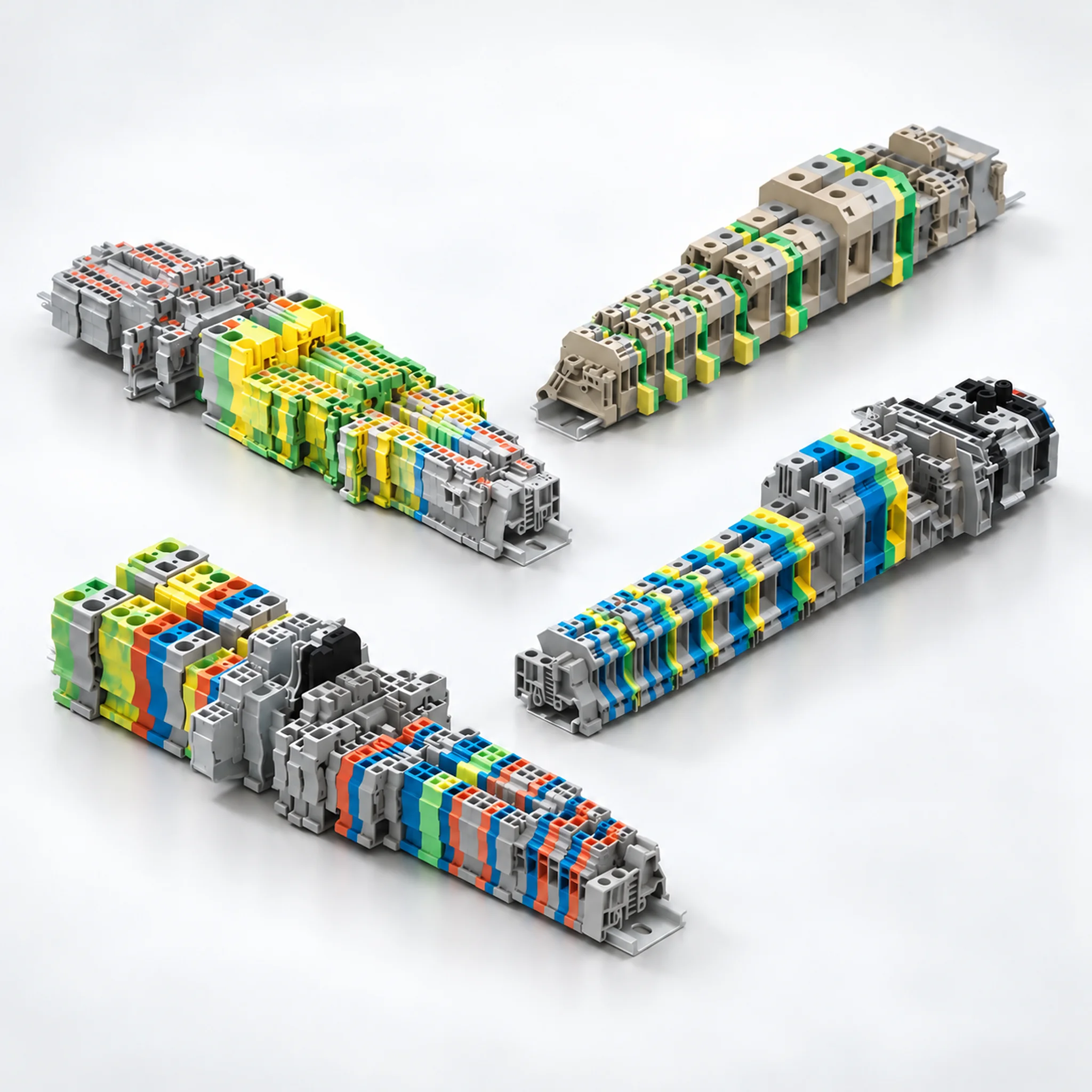
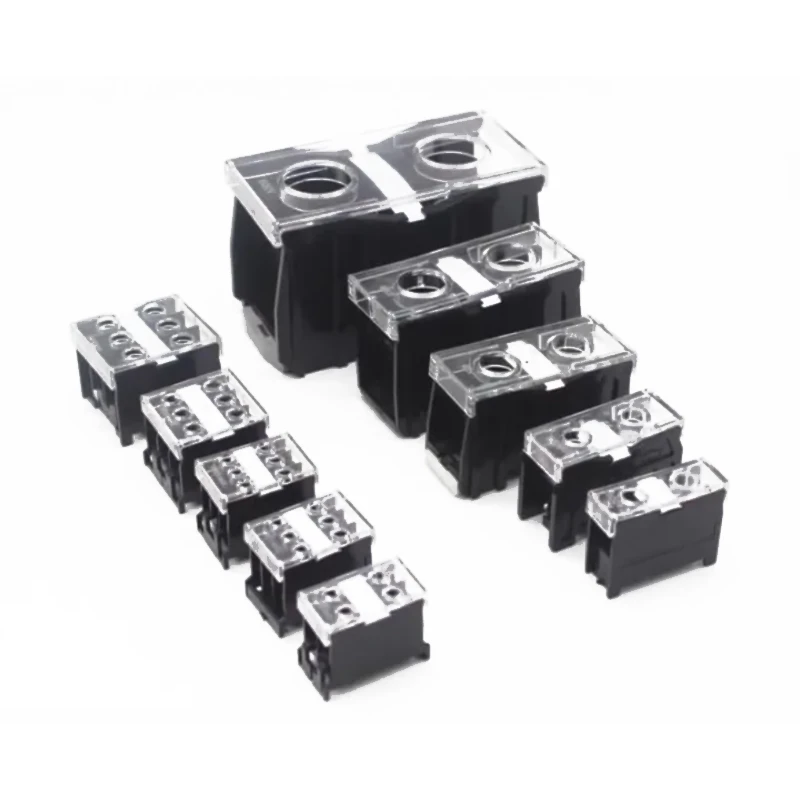
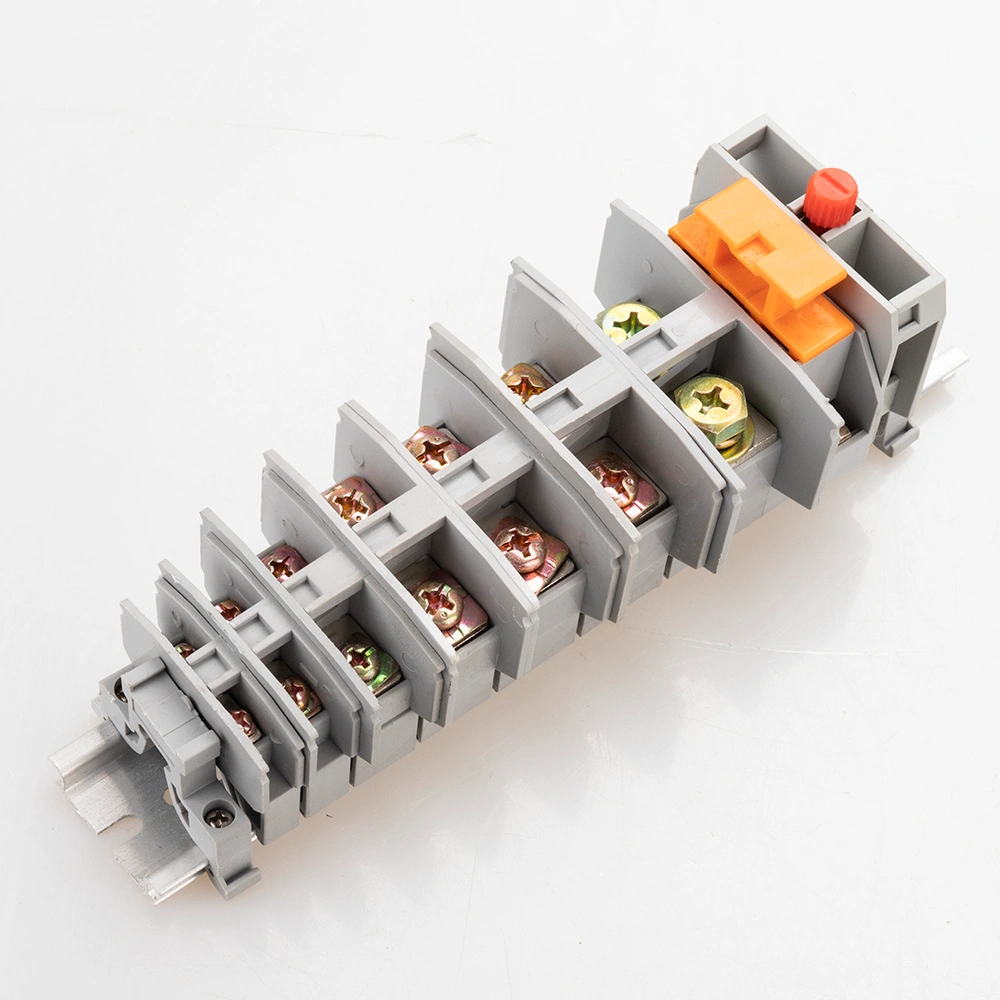
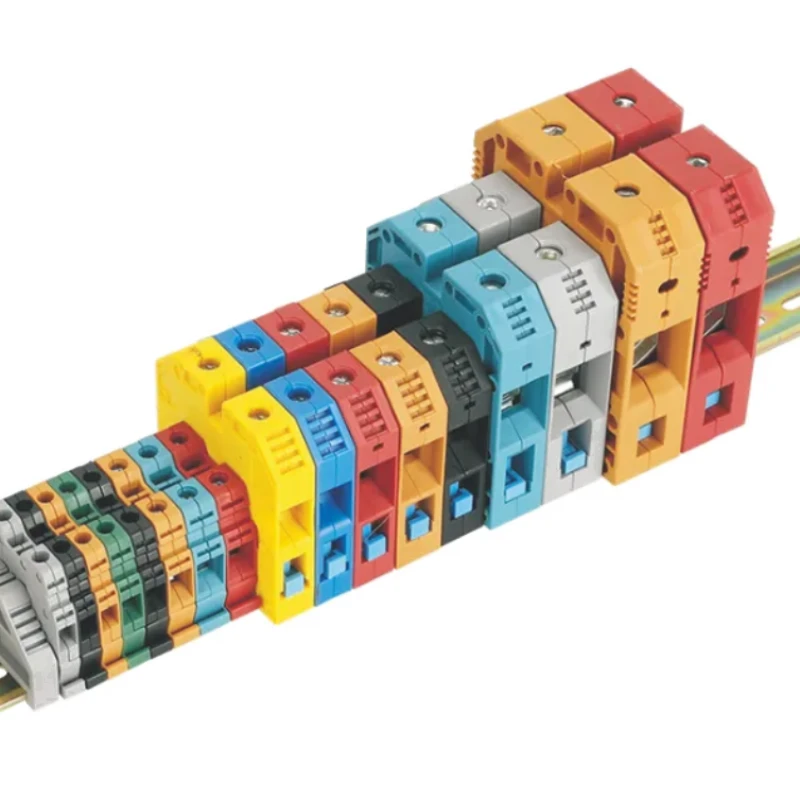
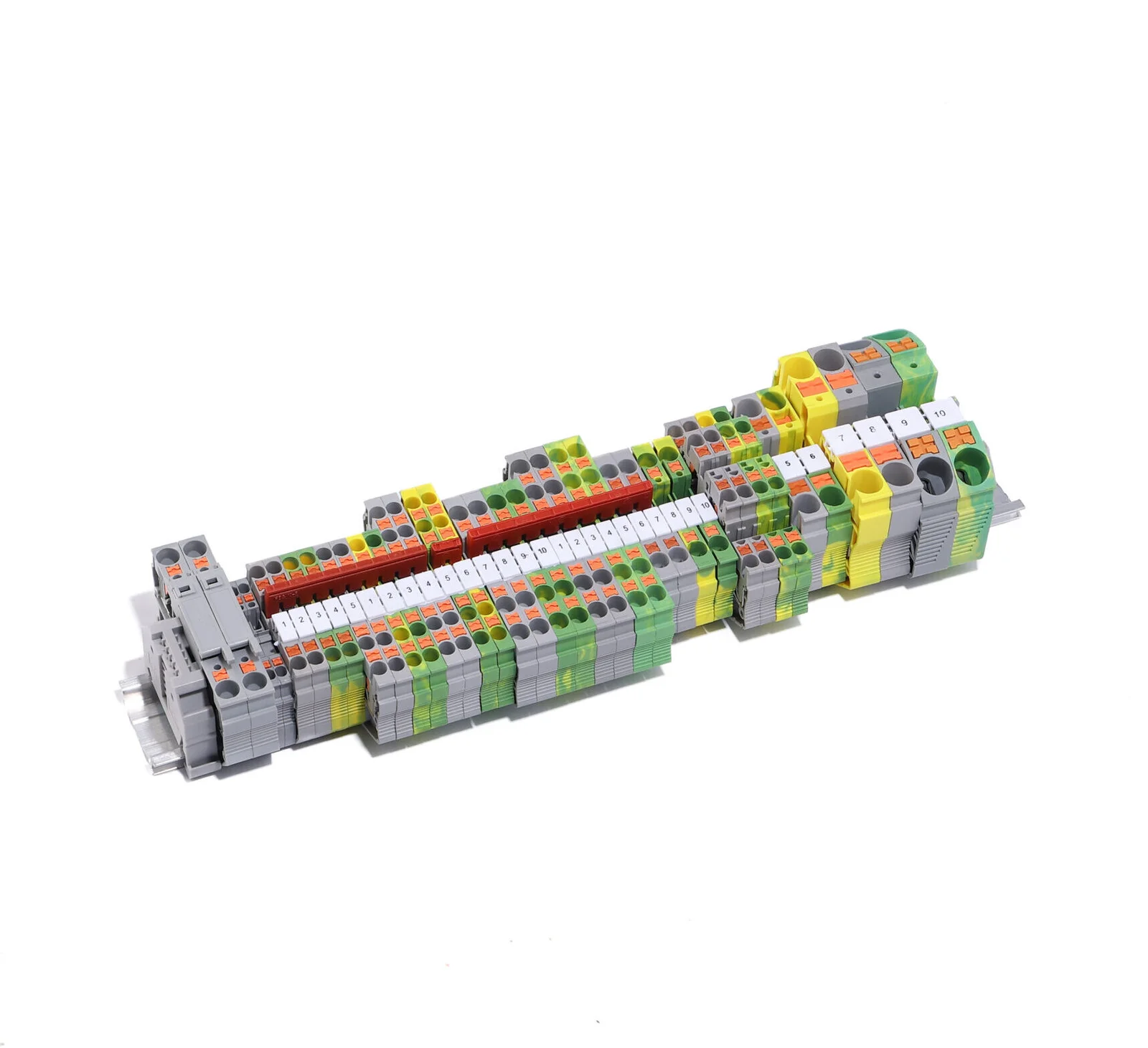
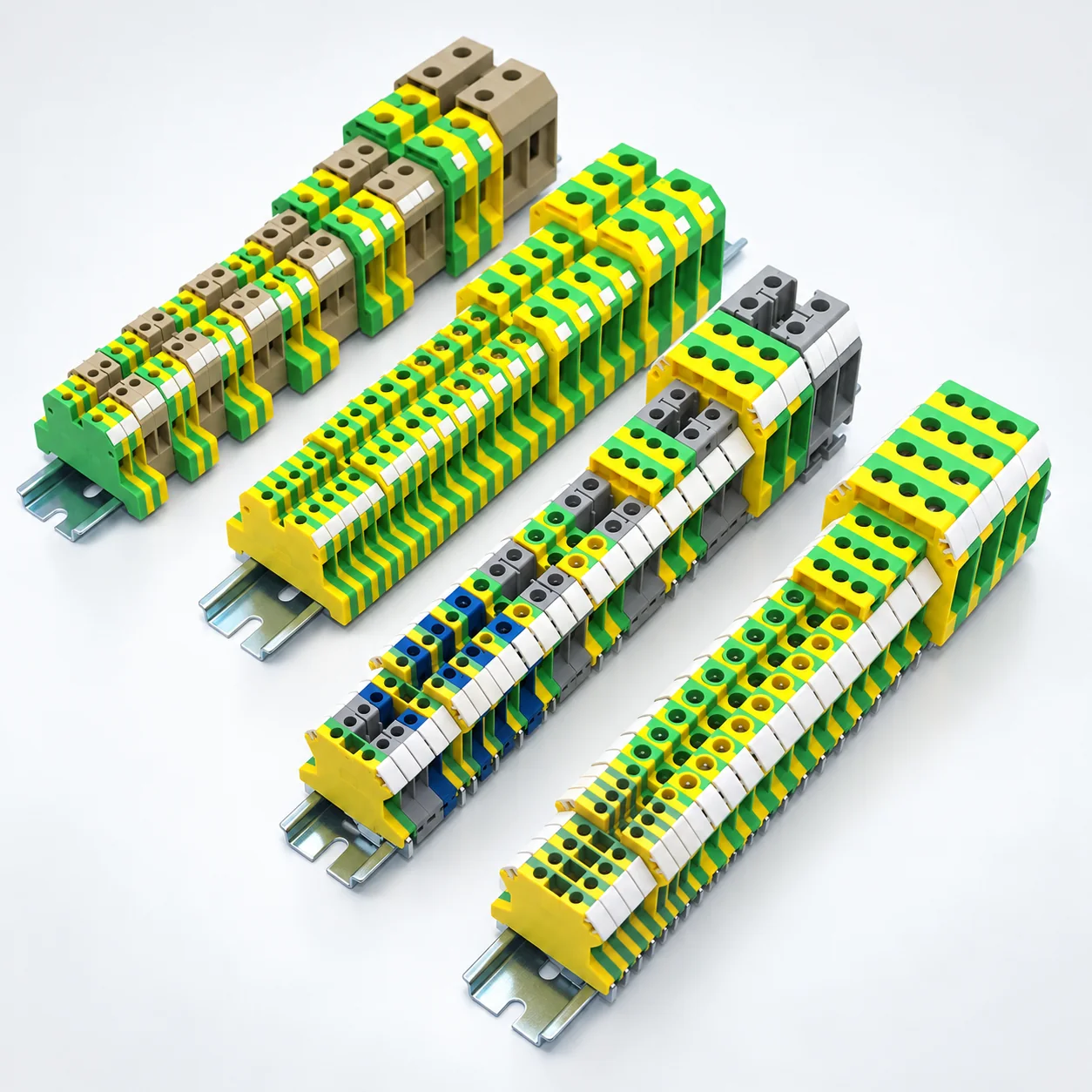
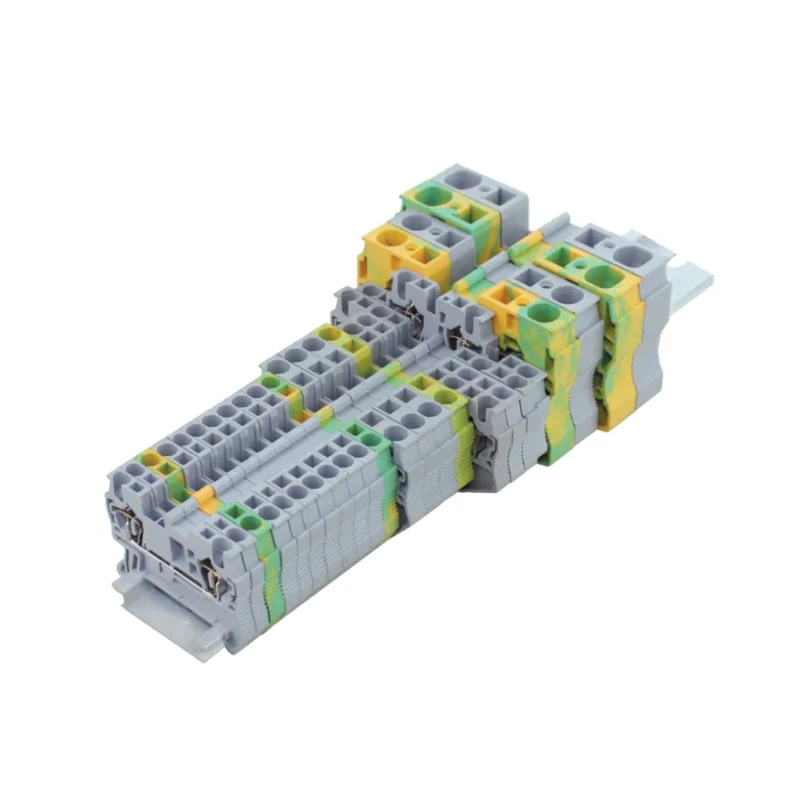
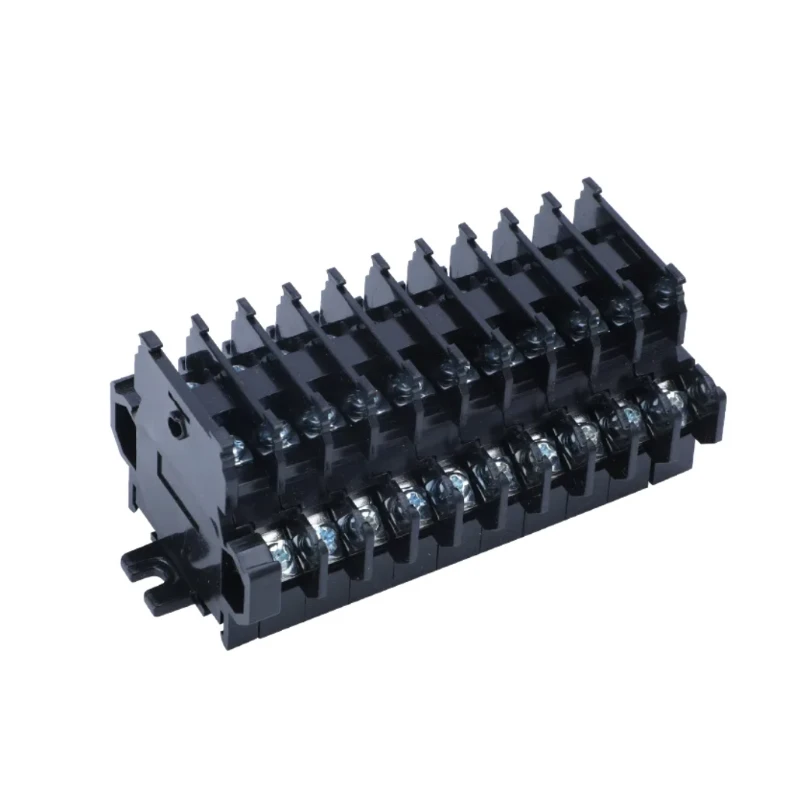
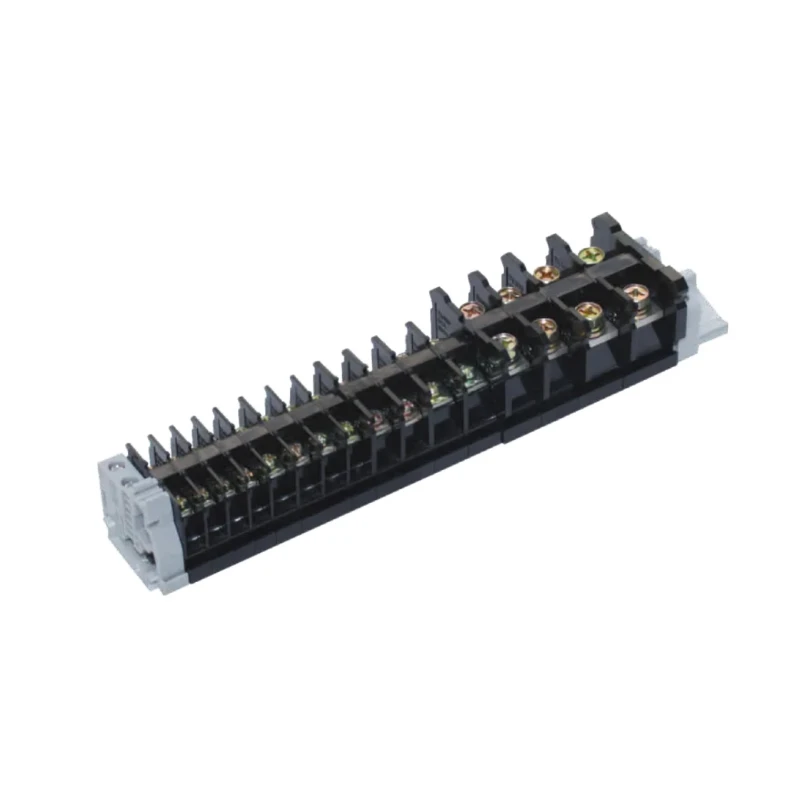
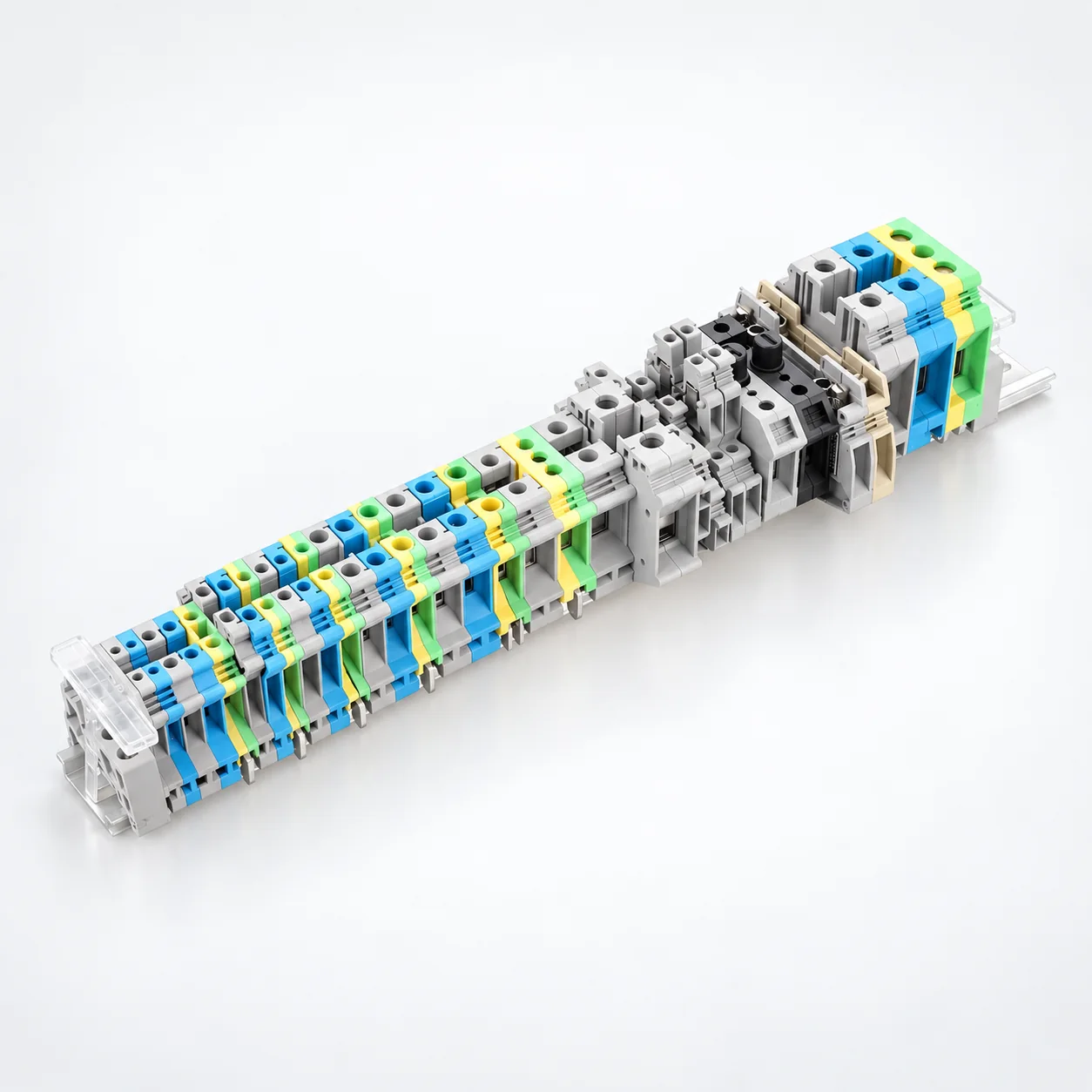
| Construction | Selection focus | Series reference |
|---|---|---|
| PT · Push-in | 35 listed models covering standard feed-through, TWIN, QUATTRO, multi-level and PE configurations. Push-in connection for suitable solid or ferruled conductors; NS 35 mounting foot. | PT series |
| SJ · Cage spring | 13 listed models, with rated cross-sections from 1.5 to 16 mm². TH35-7.5 / TH35-15 mounting. Electrical ratings are specified for eight models, not every listed variant. | SJ series |
| UK · Screw clamp | 36 listed models include standard, compact, multi-level and protective-earth terminals. Check rigid/flexible conductor ranges and the model-specific jumper and end-plate options. | UK · USLKG PE models |
| SAK · Screw clamp | Eight standard, four special-function and six EK protective-earth models. Frame-type screw connections with model-specific conductor ranges and dimensions. | SAK / SAK(JXB) · EK |
| JH1A · Screw | Nine models with listed currents of 17.5–125 A and 380 V or 500 V ratings. Review conductor capacity, screw size and the specified 35 mm or 28 mm mounting rail. | JH1A series |
| MRK · Panel connections | 11 models with listed cross-sections from 2.5 to 120 mm², individual currents of 24–269 A and 750 V or 1000 V ratings. Snap-on mounting to 35 mm DIN rails. | MRK series |
| TBD · Double-layer screw | Two wiring levels within a shared footprint. Three models rated 10, 20 or 30 A at 600 V, with 35 mm DIN rail mounting. The listed standard arrangement has 10 positions and end plates. | TBD-10A · TBD-20A · TBD-30A |
| TK · Screw | Six models from TK-010 to TK-100 with 10–100 A individual ratings and model-specific conductor sizes spanning 0.75–25 mm². TH35-7.5 mounting; check AC and DC voltage specifications separately. | TK series |
| IN · Screw | Eight models rated 600 V, with individual currents of 20–240 A and wire ranges spanning 0.75–100 mm². Transparent PC covers have tool-access openings. | IN series |
Ranges above summarize different models. Select the conductor capacity, current and voltage from the same product row.
Specify solid or stranded conductors, cross-section, ferrule use and conductors per connection. Check stripping length and permitted preparation for the exact terminal.
Choose push-in, cage spring or screw termination according to the wiring process and selected model. Confirm insertion, release or tightening instructions; do not assume all spring terminals operate identically.
Identify the rail profile and dimensions, terminal width, height and depth. Most listed families include 35 mm mounting options, but JH1A also lists 28 mm rail widths; verify each model.
Distinguish feed-through, PE, multi-level and special-function circuits. Select matching bridges, markers, end plates and end stops, then check model-specific electrical ratings.
Send the terminal series and model, conductor schedule, rail drawing, accessory list and quantities. Include required labels, packing and project documentation.
Prepare an enquiryAgree the specification and required evidence before placing your order.
Explore manufacturingList each terminal model, circuit function, conductor type and size, and quantity. Separate feed-through, protective-earth and special-function positions.
Provide the rail profile, usable rail length and panel-space constraints. Include terminal width, end components and access needed for wiring and maintenance.
List series-compatible bridges, end plates, markers and end stops. Specify circuit identification and bridge positions rather than assuming accessories are universal.
State required model documentation, inspection criteria, label artwork, pack quantities and destination. Confirm sample and supply requirements with the quotation.
OEM & PACKING
Build your din rail terminal blocks order around the selected models, identification and supply requirements.
List each terminal model, circuit function, conductor type and size, and quantity. Separate feed-through, protective-earth and special-function positions.
Provide part numbers, label artwork and any batch or traceability information required for the order.
Specify quantities per model, individual packs, outer cartons and delivery destination.
They provide organized conductor termination points in control cabinets and electrical panels. The required model depends on the circuit function, wire capacity, electrical ratings, rail interface and installation space.
The PT range lists push-in connection for suitable solid or ferruled conductors. SJ is a cage spring range. Conductor insertion and release procedures depend on the selected mechanism and model; follow its specific instructions rather than treating both names as interchangeable.
No universal rail fit is claimed. PT specifies NS 35; SJ lists TH35-7.5 and TH35-15; TK lists TH35-7.5. JH1A includes 35 mm and 28 mm rail widths. Confirm the rail interface for your exact model.
They serve different circuit functions. PT includes PE configurations, UK includes USLKG protective-earth models, and SAK includes EK models. Review the intended earth connection and mounting requirements separately; do not apply feed-through current or voltage ratings by assumption.
Do not assume compatibility. Match bridges, end plates, markers and fixing accessories to the terminal model and manufacturer drawing. UK product information identifies model-specific jumper and end-plate options.
It depends on the connection mechanism and approved conductor preparation. Provide the wire type, size and ferrule details, and check the selected terminal's instructions and clamping capacity.
No. A material flammability classification is not certification of the complete terminal block. Request model-specific certification or test evidence where your project requires it.
This page focuses on DIN rail terminal blocks. For dedicated incoming-to-branch power connections such as UKK, K and UTJ5, use the separate Power Distribution Blocks range.
Send the terminal schedule, rail layout, bridge positions, circuit labels and quantities for a feasibility review. Assembly, marking, sample and packing options are confirmed for the requested configuration.
Send the terminal series and model, conductor schedule, rail drawing, accessory list and quantities. Include required labels, packing and project documentation. Include the exact model quantities, delivery destination and required documentation.
Send your part numbers, label artwork, pack quantities and shipment requirements. Feasibility, sample requirements, minimum quantities and lead time are confirmed for the requested models.